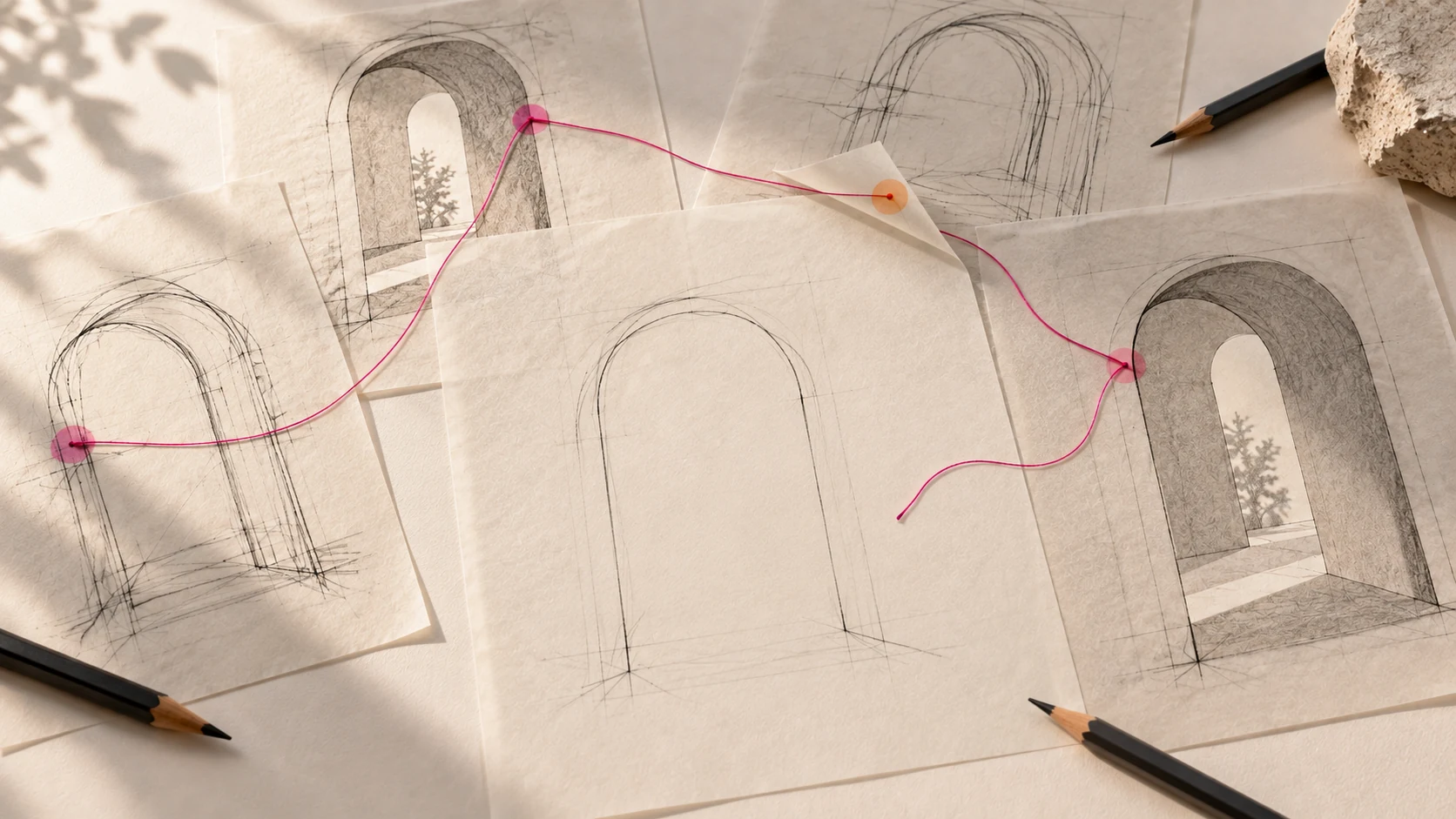
What moved the work forward?
A suggestion may matter because someone tests it, revises it or knows when to seek help. We want to understand those connections through the decisions, work and evidence.
 Documentary
Human–AI research · In development
What helps people make meaningful progress with AI, and what can one attempt teach the next?
We are developing ways to connect consequential decisions with the work and tests that follow them, and investigate what those experiences could contribute to later attempts.
Explore our first rehearsal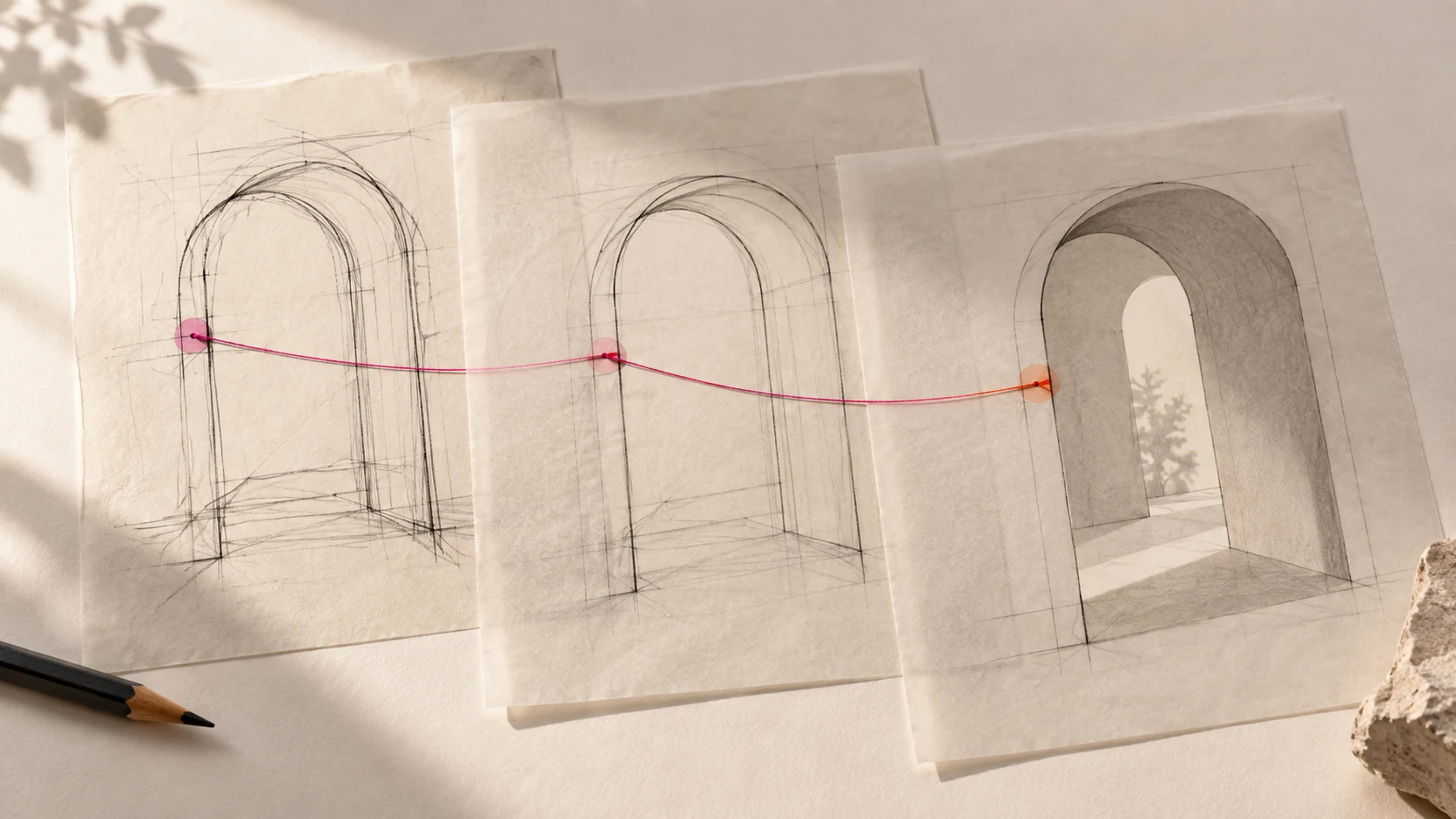
01 · The questions
A finished result leaves questions open. What changed the direction? What did the person learn to judge? What would still be useful somewhere else?
A suggestion may matter because someone tests it, revises it or knows when to seek help. We want to understand those connections through the decisions, work and evidence.
Expectations, judgment and ways of working may change with AI. Better performance with assistance and an ability someone retains are different questions to examine.
The longer ambition is knowledge, methods and technology that improve later work. Their value depends on being useful in a meaningfully different situation, under that work’s own tests.
02 · Our first rehearsal
September 2026
Documentary storytelling follows the people, relationships and choices that shape a meaningful attempt. Our research examines what that context contributes to understanding decisions in human–AI collaboration.
In our first research rehearsal, we traced 23 decision episodes from a real creative collaboration and developed a method for comparing AI reconstructions of the work. The analysis connected briefs, instructions, revisions and outcomes, while additional contextual accounts supplied details about contributions and personal criteria.
Inside the comparison
One creative collaboration · Two AI reconstructions per condition

We’re building on this work to investigate how contextual, cultural recording can contribute to understanding research decisions.
03 · Toward useful methods
A reliable way to understand an attempt could eventually help people evaluate AI assistance, recognise when expertise is needed or make a better-supported decision in unfamiliar work.
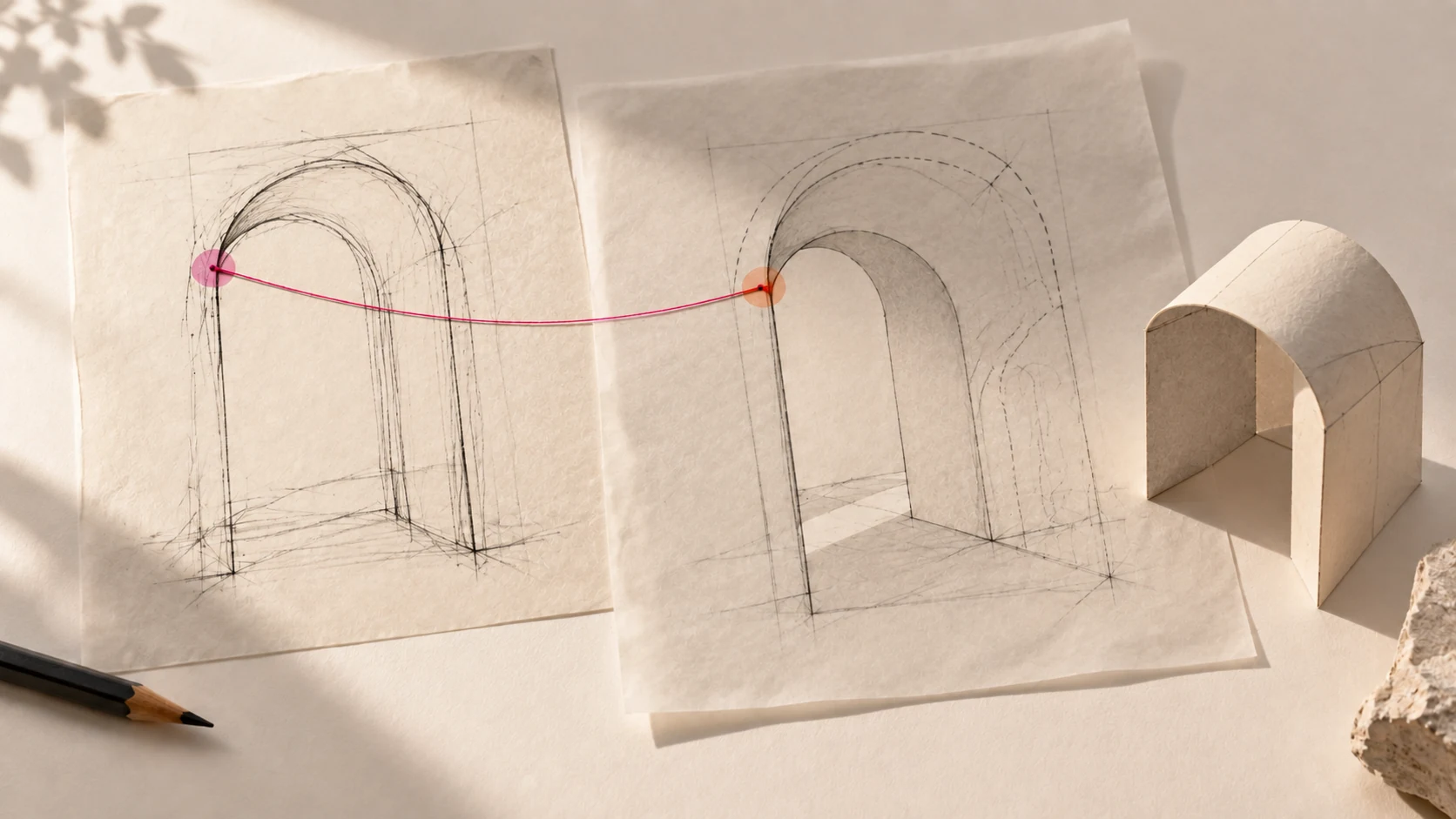
We want to establish what can be learned beyond the interactions and files usually left behind. Useful comparisons and scrutiny from relevant experts are central to that work.
Repeatable methods and technology could serve people beyond an individual filmed journey. That requires evidence of usefulness in later work and a clear need from the people who would use it.
The public film and research evidence have distinct purposes and permissions. The person’s account, observable actions and relevant tests each contribute something different to understanding an attempt.
A question behind the work

A personal observation about changing models opens a question about changing expectations, judgment and ways of working.
Read the essayDevelop the research with us
We welcome documentary developers, human–AI researchers and domain experts who want to help shape the next comparison.
Start a research conversation